DNC Report: 192 pages, Zero Conclusions
Democrats raised $15 billion in 2024, outspent Republicans everywhere, and couldn't finish the report explaining why they lost. A look inside the machine that profits from defeat.

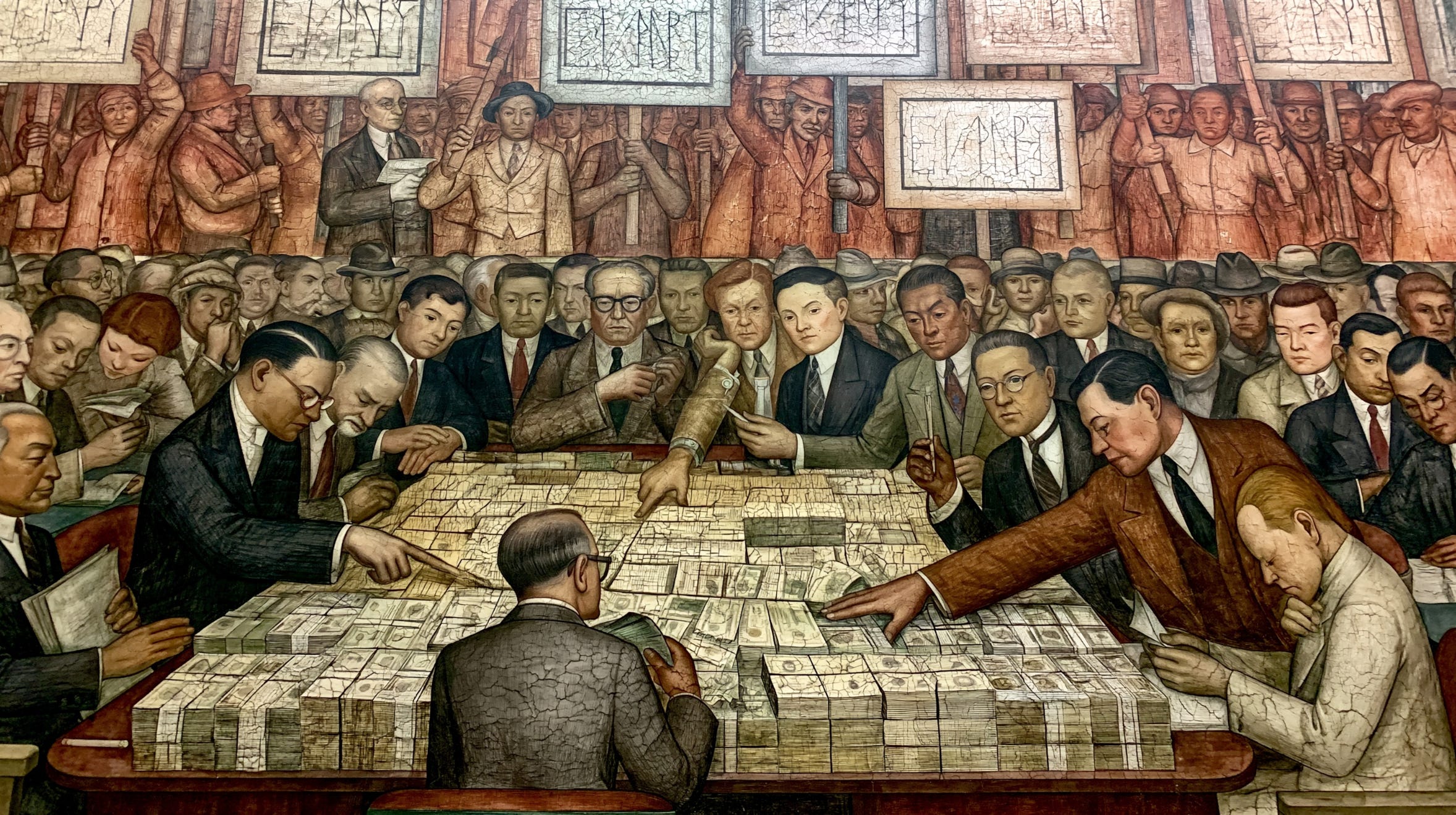
I downloaded the 2024 DNC “Autopsy” and was shocked at what it didn’t contain.
The Democratic Party commissioned a 192-page report on why it keeps losing. Then it couldn’t finish the report.
You can download it too. It’s 192 pages long, commissioned by the Democratic National Committee, and titled Build to Win. Build to Last. That is either the most honest thing the Democratic Party has produced in twenty years, or proof that they still don’t understand what honesty requires.
Let’s start with what it is. It’s an after-action report on 2024. A long, expensive autopsy on how you lose the presidency, the Senate, and the popular vote to a convicted felon who spent much of the campaign barely trying.
Now let’s talk about what it isn’t. It isn’t complete. The Executive Summary is missing. The National Overview is missing. The entire House section says “PENDING.” The Conclusion says, literally, “This section was not provided by the author.” The Sources section — where you prove your claims — is empty. And scattered through the margins, like the world’s most passive-aggressive peer review, the DNC’s own fact-checkers left notes reading “claims contradict public reporting,” “no evidence provided,” and “data appears inaccurate.”
The Democratic Party commissioned a report about why they keep losing. They couldn’t finish it.
You genuinely cannot make this up.
They already knew. They didn’t do it.
Here’s what makes this document painful rather than just embarrassing. Buried beneath the missing sections and flagged errors and careful bureaucratic throat-clearing are real admissions. Things the party has known for a decade and refused to act on.
After 2022, the DNC conducted an organizing review. They produced seven findings and five recommendations. Build a national organizing team by Q1 2023. Launch training programs by Q4 2023. Hire state staff early. Start earlier. None of it happened. Senior state staff hiring began in the spring of 2024. Final hires came in October — weeks before the election.
So they wrote another report.
The 2024 coordinated campaign made 370 million voter contact attempts. Door-to-door canvassing — the thing that actually works, the thing political scientists have spent careers proving works — represented 8.6 percent of those attempts. Phones and texts, which have contact rates of 2.2 percent and 0.8 percent, respectively, ate up the rest. And 72 percent of door contacts were collected in the final month of the campaign, after several states had already started voting.
The report’s recommendation: start earlier.
$8.6 billion. They still lost the economic argument.
Now for the numbers, because that’s where this story gets truly insane.
The Harris campaign spent $903 million on advertising. Republicans spent $435 million and won. The report describes Republicans as more “focused and efficient.” With less than half the money. The party’s consultants apparently find this surprising.
Democrats raised nearly $8.6 billion across all federal races in 2024. When you add the full ecosystem, combined federal receipts hit nearly $15 billion. The report, in a display of self-awareness so bad it loops back around to funny, brags that if you took every dollar Democrats raised and laid them end to end, the stack would “circle the earth more than 33 times.”
Think about that for a second. The self-described party of working people is measuring its moral seriousness by how many times its pile of cash can wrap around the globe.
What did that money buy? Democrats outspent Republicans almost everywhere — presidential, Senate, House, and party committees. They lost the Senate, the presidency, and the popular vote.
The pollsters found that Harris lost the economy argument 18 to 81 among voters who named it their top issue. That’s not a messaging problem. That’s a reality problem.
Voters felt poorer and didn’t believe the people telling them to feel richer. The report’s prescription is that Democrats need better negative ads against Trump and a more “affirmative” economic case. That’s like a restaurant losing customers because the food is bad and deciding the answer is a nicer menu font.
The report also reveals the campaign planned to poll exactly three times during the general election, because members of the media team didn’t think polling data was essential to decision-making. An incumbent Vice President running for President. Three polls.
Where the money actually went
None of that money went to local organizers. It didn’t go to building a permanent presence in Middle America or the South, places the report casually admits the party has spent decades ignoring. Instead, it went straight into the accounts of a small, self-sustaining guild of Washington media consultants — a cartel that gets paid the same whether it wins or not.
The top 30 Democratic payees across all federal candidate spending received $1.9 billion. A narrow cohort of firms managing most of the party’s institutional spend, cycle after cycle. The report itself describes the situation plainly: Democrats are “essentially raising billions of dollars from retirees, activists, working Americans, and organized labor, and transferring most of it to the pockets of legacy and digital media oligarchs.” That’s not a critic talking. That’s the autopsy.
It’s a beautiful, self-perpetuating loop. The party uses terrifying fundraising texts to pull $25 donations from people on fixed incomes. Then it immediately hands that money to massive consulting firms to buy expensive television ads on networks that younger voters don’t watch, crafted by people who haven’t set foot in a bowling alley since the Clinton administration. They are renting temporary access to an audience they don’t understand.
Meanwhile, there’s also the tech stack. In 2012, Democrats thought they were geniuses because of a database named Vertica. By 2016, Vertica was crashing for 16 hours at a stretch, and Hillary Clinton was complaining that her data was “mediocre to poor, nonexistent, wrong.” So they built a new system called Phoenix. They ran an emergency intervention in 2024 just to keep it from collapsing under its own weight. They spent billions tweaking dashboards while their core coalition walked out the door. The party replaced the union hall and the precinct captain with an algorithm, and then acted shocked when the algorithm couldn’t tell them why working-class men were leaving.
Josh Stein solved it in North Carolina
The report spends thirty pages marveling at Josh Stein winning the North Carolina governorship as if he’d split the atom. He ran on his record as Attorney General. He showed up in rural counties. He talked to men. He defined his opponent early and hard. He won white non-college voters at 50 percent while Harris got 43 percent.
The report presents this as a revelation.
It is not a revelation. It is the basic blocking and tackling Democrats used to do before they decided data models and late-cycle TV buys could substitute for showing up. While groups like Turning Point USA and the Koch network are “always on,” building permanent operations in communities year-round, Democrats run a seasonal churn-and-burn operation. They drop out-of-state college kids into rural precincts in October, wonder why locals won’t answer the door, and then shut down the entire operation on the second Wednesday of November to go dark for two years.
The Ron Brown section of this report is genuinely moving. Brown led the party out of three straight presidential losses by insisting Democrats get “real about the politics of success” and compete everywhere. He died in 1996. The party has had nearly thirty years to apply his lessons. The headline insight in 2025 is: maybe talk to rural voters.
An audit of a successful enterprise
Here is the thing the report cannot quite bring itself to say: this is not a story about a failed party. It’s a story about an institution that succeeded wildly at everything except winning.
The consultants made their fees. The media companies sold their ad blocks. The tech vendors secured their next round of funding. Everyone in the skyboxes won. The only thing that lost was the party.
The report gently asks whether “new organizations are needed to fill gaps.” It asks whether existing approaches have worked. It asks whether resources are being “properly invested.” It does not name names. It does not pull contracts. It does not say, “We have been paying the same people to lose for a decade, and perhaps we should stop.”
Instead, it just kind of trails off.
The Executive Summary is missing. The author did not provide the Conclusion. The Sources section is empty.
Build to Win. Build to Last.
They couldn’t even build to finish the report.