
MLB Caught Flat-Footed by AI
Baseball built itself on math, then panics over a chatbot.

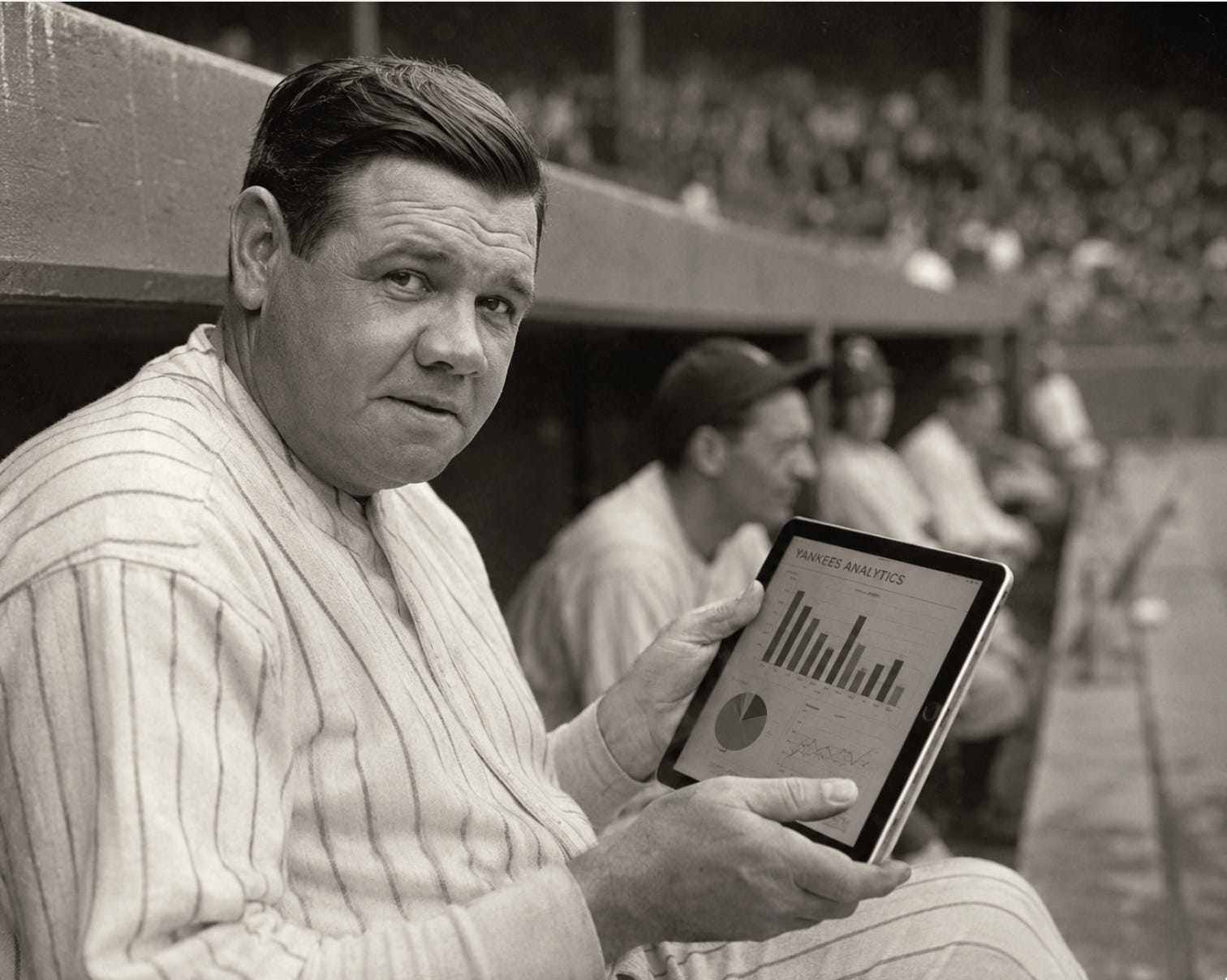
MLB banned AI chatbots from dugout iPads this week, and the reaction from most corners was some version of relief — finally, a major sport draws a line and says: let humans decide. Good for baseball. Good for us.
I don’t buy it. Not because the stated concern — AI creeping into decisions “traditionally made by players and coaches” — is fake. It’s real, and worth taking seriously. I don’t buy it because the rule, examined closely, targets the wrong thing, for reasons that don’t hold up, using an enforcement mechanism that guarantees it won’t do the one job it claims to do.
A League Built on Math Suddenly Recoils From It
Start with the sport itself. If there is a professional league that has built its modern identity around statistics, it’s this one. Baseball didn’t back into quantification — it ran toward it harder than any other major sport. Moneyball wasn’t a controversial idea twenty years ago; it’s the operating system now. Front offices employ people with astrophysics backgrounds to model spin rate and exit velocity. Statcast puts sensor-level data on every player’s every movement into a public dashboard. This is a league that spent two decades teaching its fans to think in advanced metrics instead of batting average. Recoiling from a tool because it does math is, on its face, out of character.
So the more careful version of MLB’s rationale — not something the league has actually said, but the most charitable case one could build on its behalf — reaches for a distinction between preparation and execution. Scouting reports, matchup charts, pre-game modeling: always fair game. What’s different, this argument goes, is a chatbot generating a live recommendation mid-at-bat, collapsing a decision a human is supposed to make under pressure into an output a human just executes.
It’s a tidy distinction.
Every Pitch Was Already the Real Thing
It’s also wrong, and it’s wrong because of something baseball people know better than almost anyone: there is no such thing as pre-game pitch strategy that survives the first pitch. The core strategic relationship in the sport — pitcher and catcher, dugout and batter — isn’t planned once and run on autopilot. It’s renegotiated every pitch. The catcher reads the count, the swing just taken, what got fouled off, calls a sign; the pitcher shakes it off or nods; the dugout signals the batter based on what it saw two pitches ago. That loop predates Statcast, predates iPads, predates the DH. It is, by definition, real-time synthesis under pressure — the exact thing this version of MLB’s rationale wants to claim was human-only until now. It never was. The “prep versus judgment” line doesn’t describe how baseball has actually worked at any point in its history.
Which leaves a fair question the prep-versus-judgment framing was trying to answer: does a rule need to be airtight to be legitimate? No — and this is worth granting. Sign-stealing rules and PED testing are both trivially circumventable in theory and still function as real deterrents, because their value isn’t purely mechanical enforcement, it’s the norm they assert. MLB could be making that kind of move here: not “we can stop this,” but “we’re telling you this isn’t the kind of decision-making we want in this game.”
That would be a coherent defense — if the rule looked like it was written to assert a norm. It doesn’t. It bans a specific tab on a specific league-issued device and leaves every adjacent channel untouched: a personal phone, a coordinator two floors up radioing a suggestion down, an earpiece. Some of those may run into MLB’s existing dugout-electronics restrictions from the 2021 sign-stealing crackdown, some may not — but the rule itself doesn’t say. A norm-setting rule names the behavior it’s rejecting. This one names a piece of hardware.
What Actually Happened Was a Podcast, Not a Principle
And look at how it arrived. MLB doesn’t do sweeping mid-season policy changes — the league treats structural rule shifts as an offseason ritual, almost as a matter of institutional temperament. This one showed up anyway, via a memo, days after a former pitcher said on a YouTube livestream that his old team had been using AI to call pitches. The league’s own competition-committee review found every club compliant with the rules that existed at the time. Nobody was cheating under the old rules — which tells you the new rule wasn’t a response to rule-breaking. It was a response to a practice, previously legal, that had just become public.
That’s not a league drawing a principled line about judgment in sports. That’s a league managing optics after getting caught flat-footed by a podcast. Aaron Judge, asked about it, said he couldn’t believe teams were making decisions off AI — genuine surprise or a well-managed non-answer, take your pick, but either way it tells you the players this rule claims to protect weren’t in the room when it was written.
None of this is really about baseball. It’s the shape institutions default to whenever a normal, ongoing practice gets embarrassing before anyone’s decided what to think about it: regulate the visible instrument, leave the underlying behavior alone, and call it a policy. Baseball just happens to be doing it in public, with a memo and a quote sheet, where the rest of us can watch the whole mechanism work.