
The Chyron That Explains Everything
The 25th Amendment exists. The press has decided you don’t need to know that.


The Chyron That’s Covering for a Constitutional Crisis
“TRUMP’S WAR PLAN CONTRADICTS HEGSETH AND RUBIO.” Red banner. White letters. Breaking news music. Four hundred dollars an hour of media infrastructure deployed to tell you that people inside the same administration are saying different things about a war — as if this is the kind of problem that gets resolved in a staff meeting.
It doesn’t get resolved in a staff meeting. There are no staff meetings. There is one man who has told you, repeatedly, using his actual mouth, that nothing limits his power — and a television apparatus that has decided the story is the scheduling conflict.
Here’s how framing works: “Trump’s war plan contradicts Hegseth and Rubio” tells your brain there’s a disagreement inside an administration. Disagreements get resolved. Memos get written. Normal stuff happens.
This frame tells a different story: “The President’s stated military strategy is incoherent to his own Secretary of Defense and Secretary of State, and the President has publicly declared himself unconstrained by law.”
Same situation. Completely different implications. The press chose the first one. That choice is not neutral.
The Amendment Nobody Will Say on Television
The 25th Amendment is in the Constitution. Section 4 says the Vice President and a majority of the Cabinet can remove a President who cannot discharge the duties of his office. It has never been used. Not once in 58 years.
Right now, we have a President who has publicly, proudly, repeatedly declared himself unconstrained by law — whose war planning is apparently news to his own Secretary of Defense — and the 25th Amendment is being discussed on your television approximately never.
The only thing keeping Section 4 in the drawer is an assumption. Not a court ruling. Not a law. An assumption — that “cannot discharge” means physically incapacitated, comatose, medically non-functional. The text doesn’t say that. Nobody voted on that interpretation. It hardened into conventional wisdom the way bad ideas always do: through repetition, through deference, through generations of people deciding it was safer not to test it.
An assumption held in place by cowardice is not a legal precedent. It’s a dare. The press won’t take the dare. So here we are.
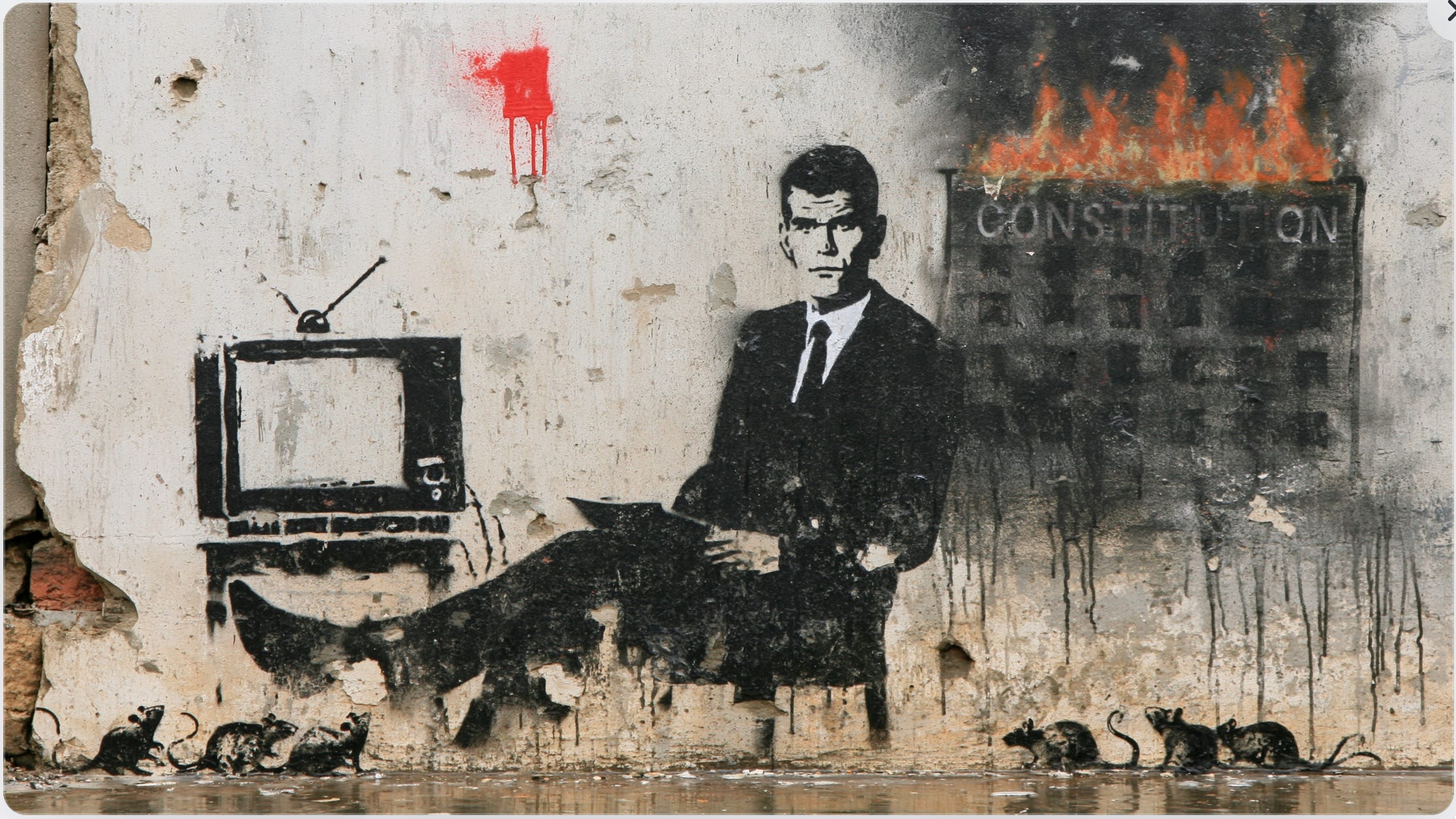
The Cabinet Problem Is Actually Two Problems
Here’s something the coverage is completely botching: why the Cabinet won’t act.
Option one: they’re scared. They know something is wrong, they’ve calculated the personal cost of acting, and self-preservation is winning. Cowards, in other words. Garden-variety, historically unremarkable cowards.
Option two: they agree. They’re not reluctant bystanders watching something go wrong. They are the thing going wrong. Active participants, not hostages.
If it’s option one, pressure matters. Sunlight matters. Making the cowardice visible and expensive might change something.
If it’s option two, you’re asking co-conspirators to arrest themselves. The mechanism doesn’t just face political obstacles; it faces a more fundamental problem: the people holding it are on the other side of the door it was designed to open.
The press has not asked which one it is. This is staggering. This is the ballgame. And it goes unasked every single day while the chyron tells you about the contradiction.
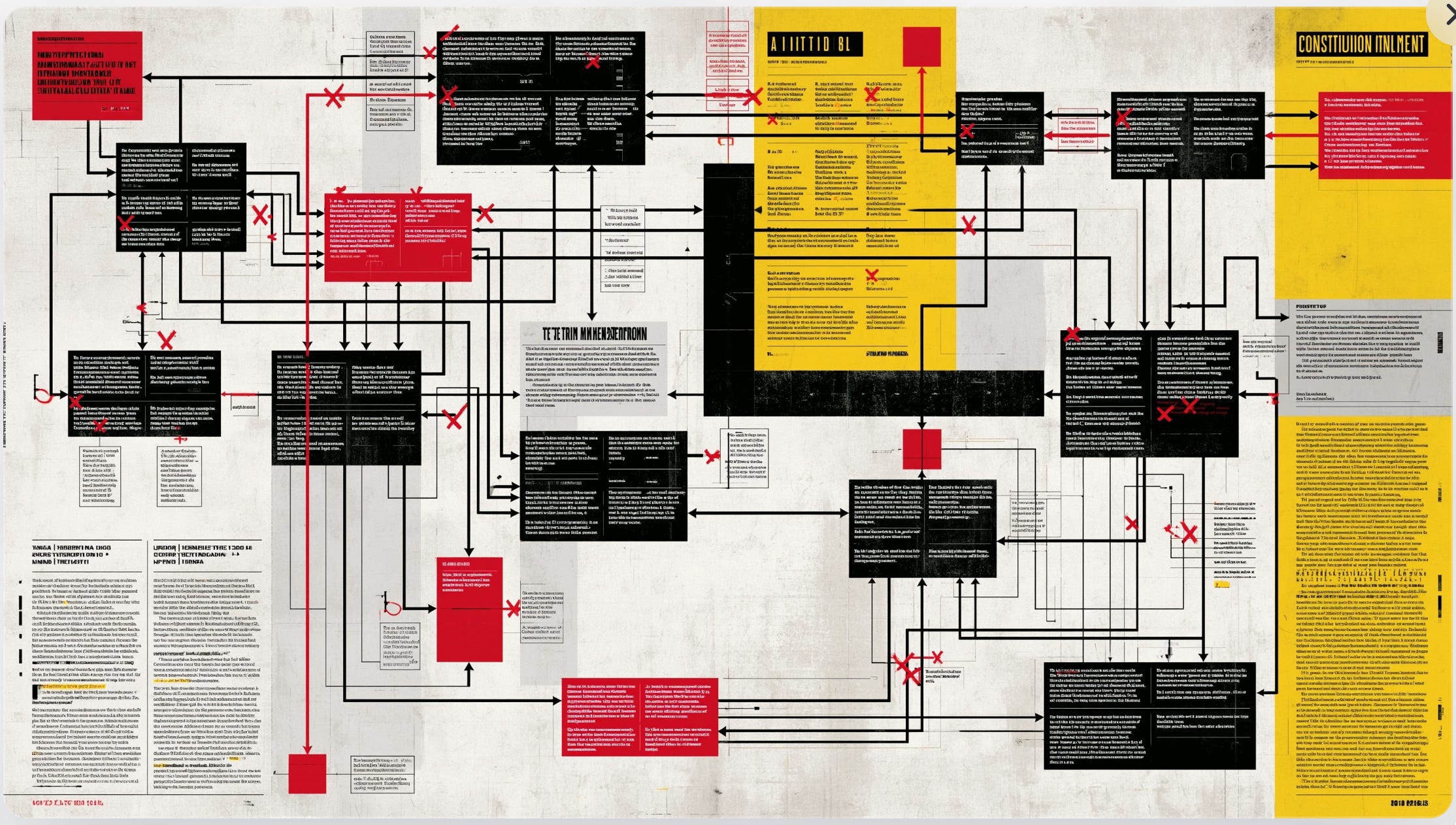
The Sophisticate’s Surrender
There’s a particular type of person you see on television — usually with a good haircut, always with the pained expression of someone who knows more than they’re allowed to say — who delivers, with great gravity, the phrase “there’s no bottom.”
“There’s no bottom” is what you say when you’ve been paying attention so long that attention has become its own reward, when documenting the collapse has replaced any obligation to do something about it, when sophistication becomes the excuse for paralysis dressed up as wisdom.
Some of these people are making a real argument: that conditions producing this are systemic, that no single mechanism is sufficient to the scale of the rot, that procedural solutions applied to structural problems are band-aids on bullet wounds. Fine. Make that argument. But make it while demanding the band-aid be applied, because the alternative is standing there watching someone bleed while explaining that band-aids have limitations.
And yes — there’s a legitimate counterargument against pushing the 25th Amendment: what if you push it and nothing happens? Given this Cabinet, failure is not a possibility; it’s a business plan. A failed invocation is a massive gift to the President. Confirms every persecution narrative. Demoralizes everyone counting on institutions to hold.
But silence has costs too. They accrue slowly, diffusely, in the form of an electorate that doesn’t know a mechanism exists, a press corps that has normalized the abnormal, and a window of possible action that closes a little more every time someone decides the safer play is another chyron about contradictions.
Silence isn’t caution. Silence is a choice to let the clock run.
The chyron tells you there’s a contradiction. What it will not tell you is what the contradiction means, what exists to address it, who decided not to address it, or what we lose every day that decision stands.
That’s not journalism failing. That’s journalism doing exactly what it has decided to do.