
AI: The Miracle and the Mishap
AI is like every invention that arrives carrying its own accident in the same box

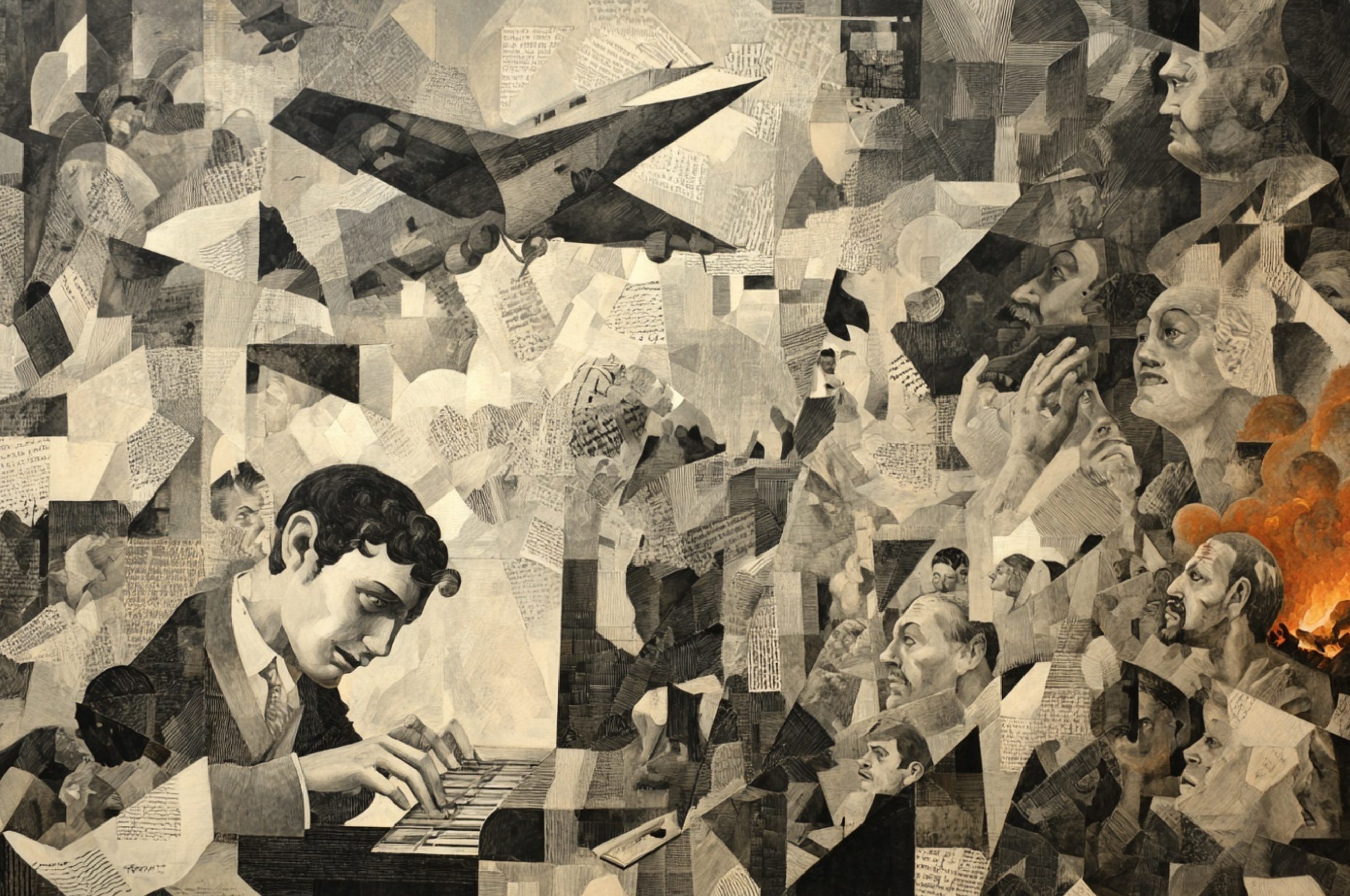
“When you invent the ship, you also invent the shipwreck.
When you invent the plane, you also invent the plane crash.” — Paul Virilio
That’s the whole story in two sentences. Technology doesn’t arrive alone; it drags its disasters along with it. The car invents the pile-up. Nuclear power invents Chernobyl. AI invents—what, exactly? Digital séances with murdered teenagers? Personalized porn scams? A $100 billion server farm designed to answer your email in a jokey tone?
You wouldn’t know it from reading most of today’s coverage. Instead, we get breathless doom lit, the same chorus on repeat: the bots are coming to steal your job, melt your brain, reanimate your loved ones, summon robo-Hitler, and possibly cure cancer in their spare time. Tech reporters sound like carnival barkers for the Book of Revelation.
Take last week’s surreal episode: Jim Acosta, the former CNN anchor, interviewing a generative-AI version of Joaquin Oliver, a teenager killed in Parkland. The bot was created with the full cooperation of his parents, who hoped to turn grief into advocacy. Fair enough. But to sit through it was to feel the familiar vertigo of this moment: the chatbot’s pitch too high, the animation stiff, the whole thing ghoulish. Are we really doing this?
Three years into the AI era, vertigo has become the baseline. Every conversation spins the same way. A CEO mutters about half the workforce vanishing. A poll shows people are terrified—just not about their own jobs. Sam Altman blogs that we’re “past the event horizon” of intelligence, then backpedals to assure us we’ll still swim in lakes. One minute, he’s building Dyson spheres in space; the next, he’s selling “Ph.D.-level answers” that can’t add. The whiplash isn’t accidental—it’s the business model.
But here’s the thing: the accident is part of the invention. Virilio again. Airplanes didn’t stop us from flying; we accepted the crash as the cost of progress. And it wasn’t all crashes—flight gave us everything from moon landings to cheap vacations in Vegas. The internet gave us Wikipedia and QAnon, access to the world’s libraries, and a sewer pipe of conspiracy sludge. That’s not proof of mass delusion—it’s proof of being alive in the world, where every miracle drags its disaster behind it.
So what if the real nightmare isn’t apocalyptic at all? What if AI is just good enough—good enough to churn out medical breakthroughs, tutoring tools, and creative shortcuts, and at the same time good enough to pollute the internet, erode schools, hollow out jobs, and waste oceans of electricity without ever delivering the promised messiah of superintelligence? What if we contort our economy and our politics around a tool that gives us the occasional moon landing but also a lot of plane crashes—less like salvation, more like Excel with better PR?
The horror isn’t the singularity, that theoretical future point where artificial intelligence (AI) surpasses human intelligence. The horror is banality. A future of half-broken chatbots writing your kid’s homework and nagging your spouse for you. Not the end of humanity—just the balance sheet of gains and losses that every technology brings.
That might be the sanest outcome of all. Because if you strip away the sermons and the stock-pumpers, what’s left looks less like revelation and more like every other technology in history: a mixed bag of miracles and wrecks, uplift and collateral damage. The trick isn’t to stop the plane from flying. The trick is to live with the crash, without making ourselves crazy in advance.