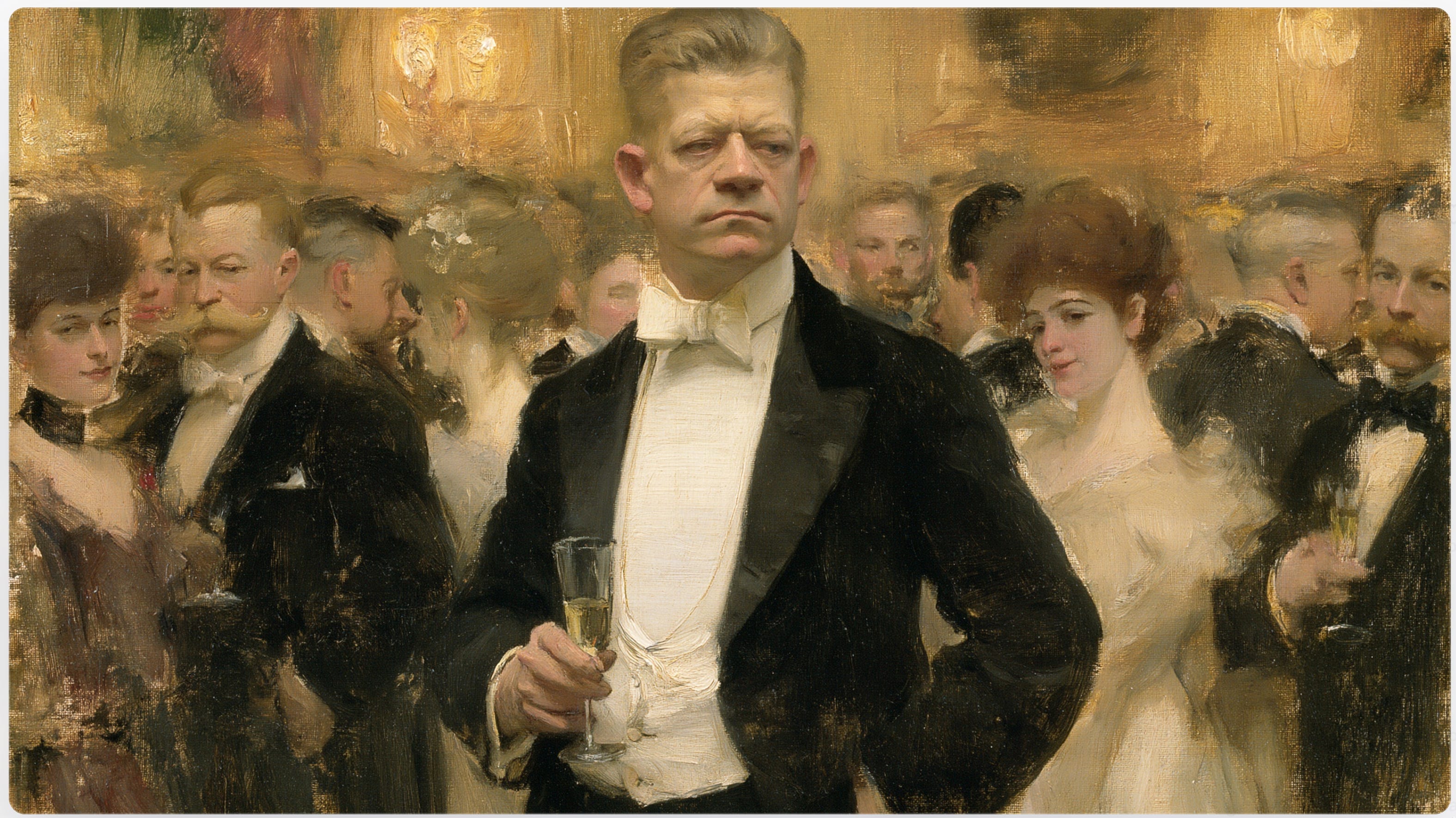
The Tuxedo Regrets the Algorithm
The Atlantic's Michael Scherer wrote a brave piece about media complicity. From inside the White House Correspondents' Dinner. In a tuxedo.

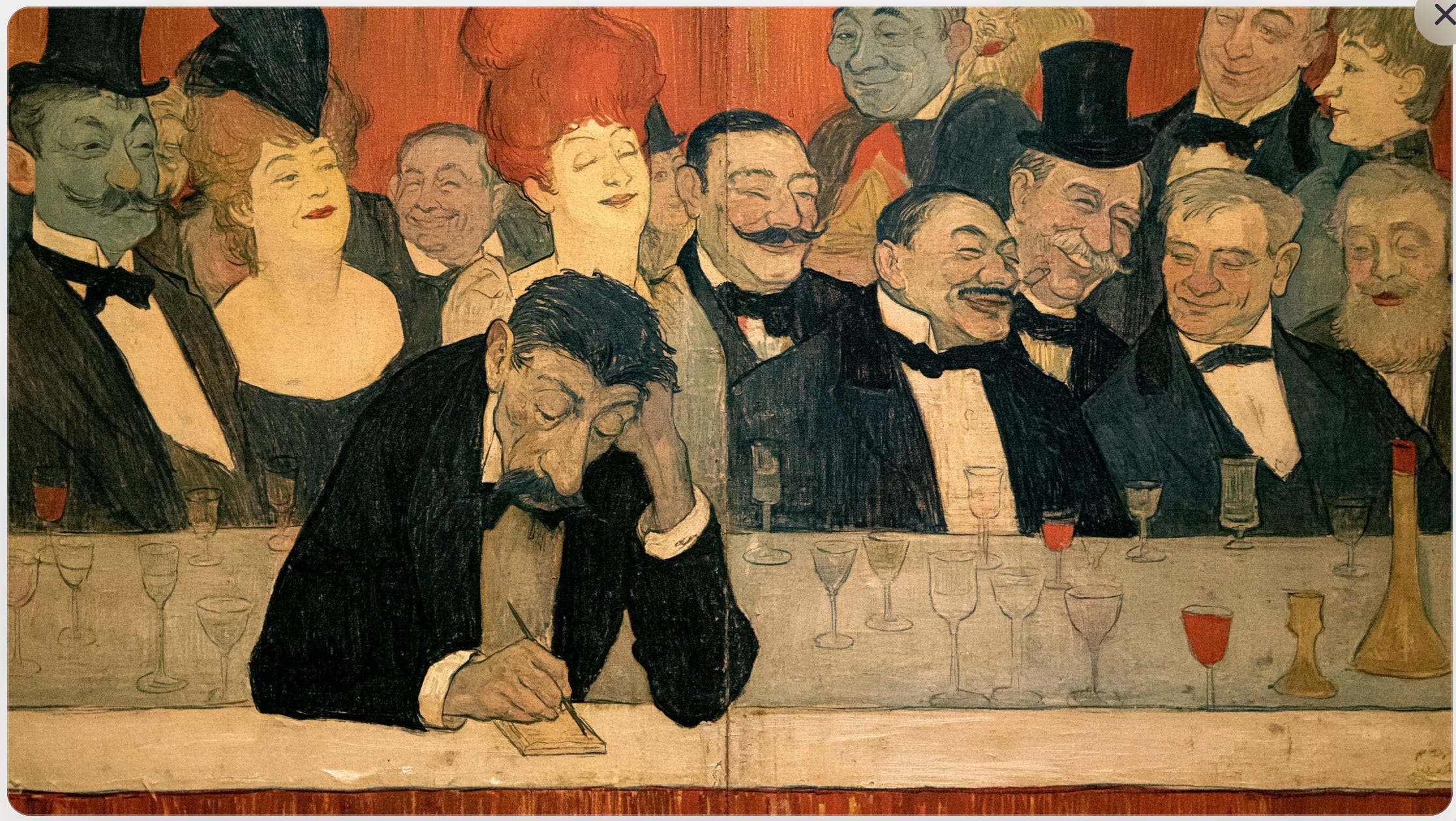
Michael Scherer went to the White House Correspondents’ Dinner party. He wants you to know he felt bad about it.
The Genre Has a Name
There’s a particular kind of American journalism that deserves its own Dewey Decimal number: the confessional think-piece in which a prominent media figure discovers, with great solemnity, that the media is broken — and arrives at this conclusion from inside a ballroom, wearing formal wear, surrounded by the people who broke it.
Michael Scherer’s recent Atlantic piece, “My Role as a ‘Complicit’ Journalist,” is a masterwork of the form.
The setup is genuine enough. Cole Tomas Allen allegedly showed up at the White House Correspondents’ Dinner with a shotgun. His manifesto declared everyone in attendance fair game, because attending a speech by a “pedophile, rapist, and traitor” made you complicit in the regime. Scherer was there. He found this troubling. He went home and wrote 3,000 words about it.
Fair. That’s his job.
But here’s where it gets interesting, which is to say here’s where it gets very Washington: Scherer’s diagnosis of the rage machine is accurate, his history of how we got here is solid, and his conclusion is roughly equivalent to a man who helped design the roller coaster expressing concern about g-forces.
The Argument, and What It Misses
The piece’s central argument is that algorithms strip nuance from journalism and pump it back out as emotional accelerant — that Scherer can write a careful, considered profile of Trump’s Napoleon complex, and by the time it’s finished passing through the social media sausage grinder, it’s just more kindling for whatever fire people were already tending. This is true. It’s been true for a decade. Columbia Journalism Review has published approximately nine thousand variations of this piece since 2016.
The difference is that Scherer names himself as part of the problem, which is meant to read as an act of courage.
It reads, instead, as the most sophisticated possible form of having it both ways.
Because here’s what the piece doesn’t do: it doesn’t reckon with why Scherer was at that dinner in the first place. He explains it as a professional necessity — you have to be in the room and earn trust to cover the powerful. Fine. Standard-issue access journalism rationale.
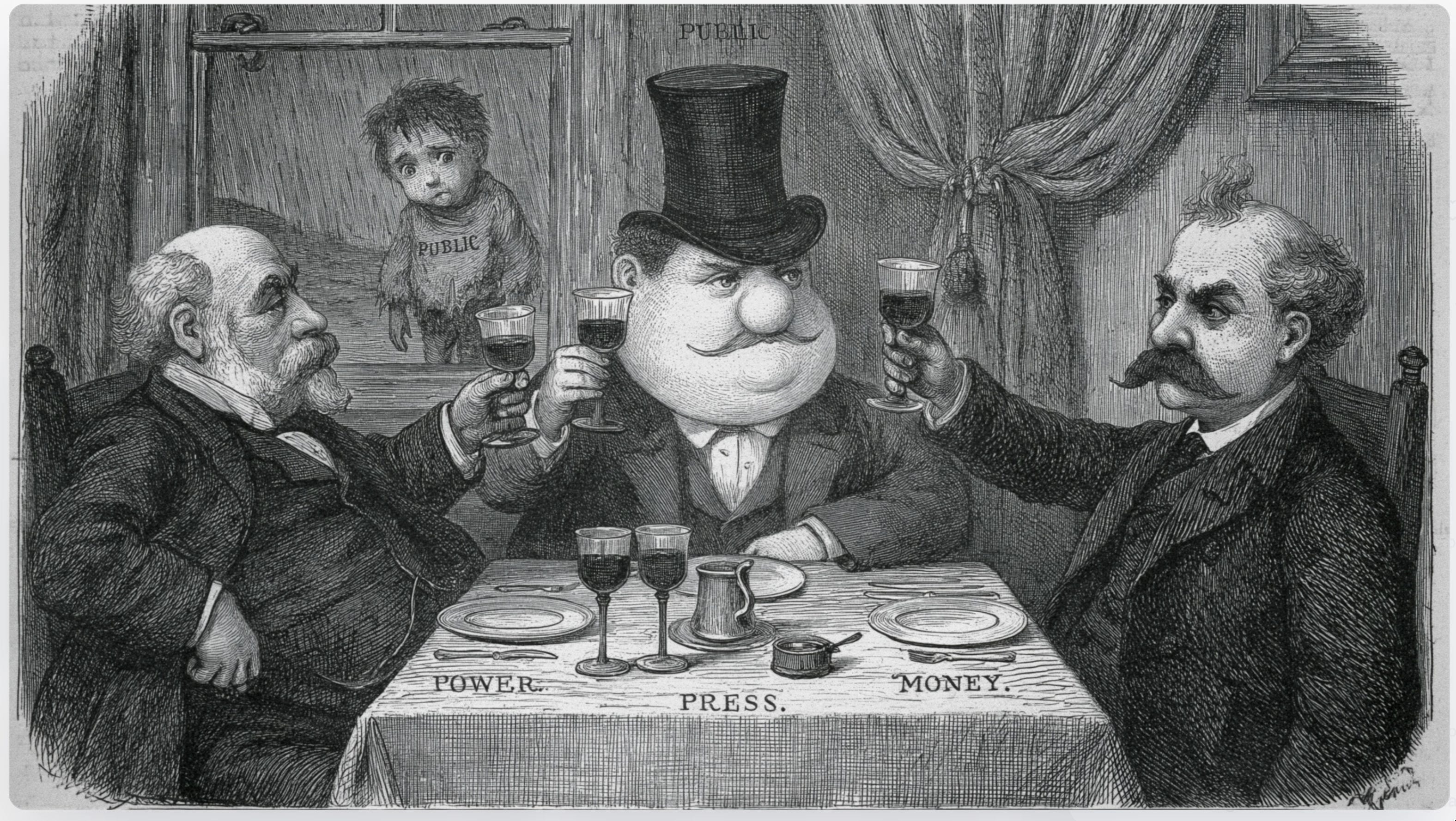
But the White House Correspondents’ Dinner isn’t a reporting trip. It’s a gala. It’s an annual ceremony in which the Washington press corps dresses up, invites celebrities, and celebrates itself in the presence of the people it’s supposed to be scrutinizing. It is, structurally, a monument to exactly the entanglement Scherer is supposedly worried about.
He mentions the tuxedo twice, almost as a self-deprecating flavor.
The tuxedo is the whole story.
The Theory That Failed Its Own Test
The press dinner exists because of a specific theory of journalism: that access to power requires proximity to power, that proximity requires cultivation, that cultivation requires social overlap, and that this overlap is perfectly compatible with adversarial reporting.
This theory has been tested for fifty years. The results are in.
What you get is a professional class that has genuinely convinced itself that eating rubber chicken with cabinet secretaries makes them better at holding those secretaries accountable — when what it actually makes them is reluctant to say the thing that would end the dinner invitations. Not corrupt. Not bought. Just gradually, structurally, socially, unable to go for the throat.
Scherer would object. He’d point to his actual reporting, which is often quite good. He’d note that the dinner is hosted by the correspondents’ association, not a lobbying shop. He’d argue, correctly, that journalists going native is a different problem from algorithms radicalizing readers. All true. None of it touches the underlying issue: the confessional media critique — I am troubled by what I am part of — is itself a product of the access culture. It’s what you write when you can’t write the more honest version.
I am part of this. I benefit from it. I am not going to stop.
The Machine Doesn’t Care About Your Feelings
The deepest irony is one Scherer can’t quite see: his piece will travel through the same machine he’s describing. The nuanced version will sit behind The Atlantic’s paywall. The algorithmic derivative will be: Atlantic journalist admits media causes political violence. Some people will nod. Some will rage. Nobody will change anything.
He ends with a call to recommit to the “basic national project” — to disagree vigorously while maintaining respect for each other’s humanity. It’s a fine sentiment. It’s the kind of sentiment that fits neatly into an Atlantic lede, sounds serious without threatening anyone’s dinner invitation, correctly identifies a problem, and proposes as its solution that we all try harder to be decent.
Which we should. Absolutely.
But decency, as a reform agenda, has a notable track record.
The algorithm is not worried.