
Why Corruption Coverage Fails
Part One of Three: Everyone is documenting the crime. Nobody is handing the victim their receipt.

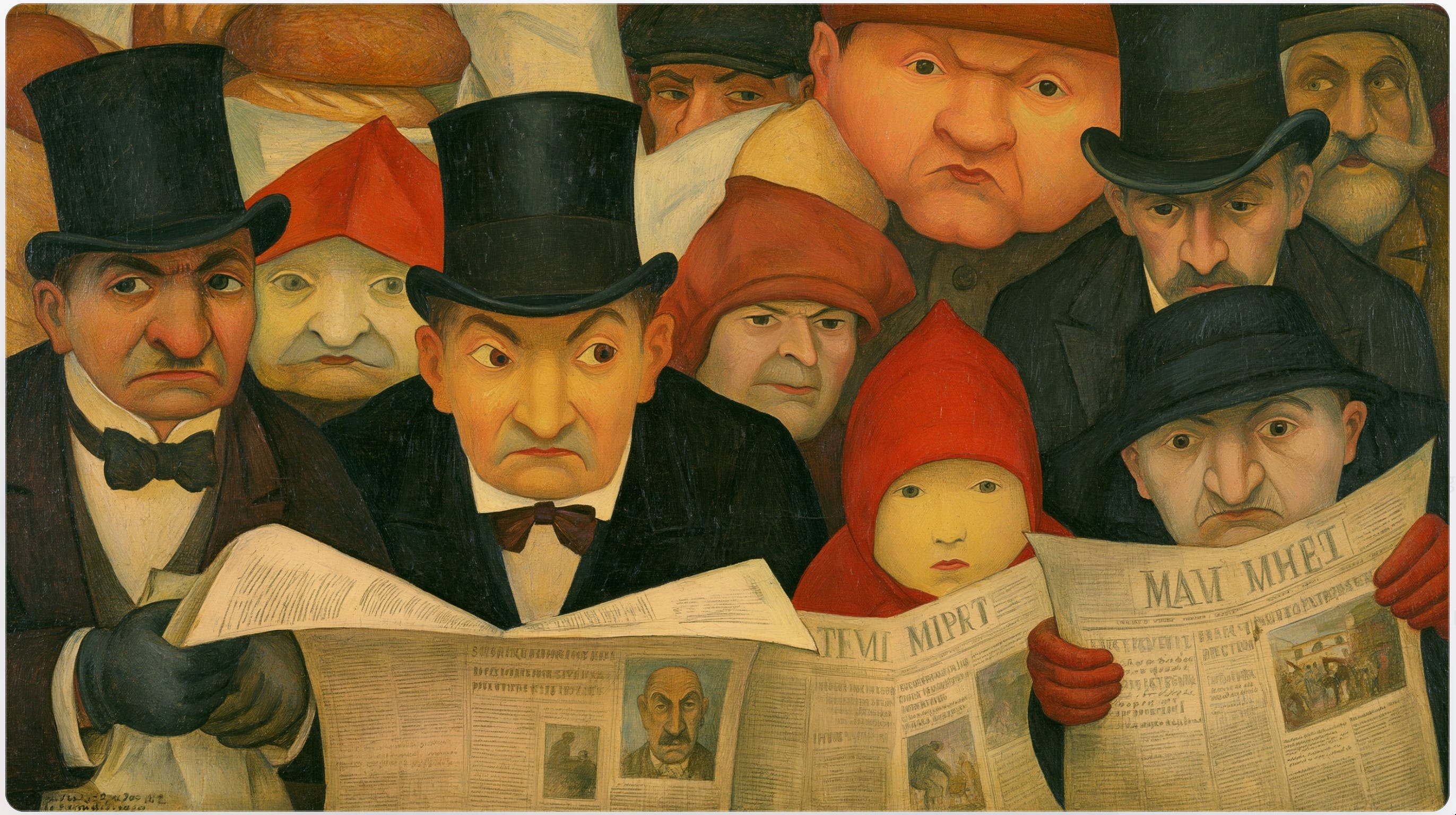
This week I'm running a 3-part series on American corruption — not what it is, but why the argument against it keeps failing, and what it would take to make it land. In Part One, we start with the problem: journalists are writing the wrong document.
There are two documents you can write about a crime. The first is an indictment. It tells you what someone did, when they did it, and why it violated the law or the norms or the basic decency that used to govern public life. The second is an invoice. It tells you what it cost you, specifically, to the dollar, and where your money is sitting right now.
American corruption journalism — and there is a great deal of it, produced by some of the best reporters alive — has spent eighteen months writing the indictment. Anne Applebaum publishes her Kleptocracy Tracker weekly, a meticulous catalog of self-dealing that reads like a RICO filing for an entire government. David Graham at The Atlantic has documented what he calls, with appropriate understatement, the most corrupt administration in American history. Mona Charen at The Bulwark has counted the money and named the amounts. The indictment is airtight.
It is also, as a political instrument, largely inert.
Not because people don’t read it. Not because the facts are in dispute. But because the indictment speaks the language of ethics to an audience that is making an economic calculation. It says: what he did was wrong. The audience — specifically the persuadable slice of the 77 million people who voted for cheaper groceries in 2024 and have not yet been shown why their groceries still cost more — needs to hear something different. It needs to hear: what he did cost you this specific amount, and here is where your money went.
The indictment produces outrage. The invoice produces a named grievance. Those are not the same thing, and only one of them is politically actionable. Here is the difference in practice: outrage is what you feel reading the Kleptocracy Tracker at your desk. A named grievance is what you feel when someone looks you in the eye and tells you the $800 toilet brush came out of your paycheck. One is a moral reaction. The other is a wound with an address.
This is not a new distinction. Franklin Roosevelt didn’t run against “economic malfeasance” in 1936. He ran against “economic royalists” who had stolen what working people built. Lyndon Johnson didn’t describe poverty as a policy failure. He described it as something being done to specific people by specific forces that could be named and confronted. The invoice tradition in American politics is real. It has won before. It has simply gone missing at the moment it is most needed.
The clearest modern proof of what it can do came not from America but from Russia. When Alexei Navalny wanted to break Putin’s hold on his country, he didn’t publish a list of crimes. He published a video of a palace. One palace, rendered in forensic and almost loving detail: the vineyard, the casino, the ice rink, the theater, the $800 toilet brush, the pole-dancing pole installed in a private suite. He walked the viewer through every room as if conducting a tour they had paid for — because they had. And then he looked directly into the camera and said: you paid for this. Not the Russian people in the abstract. You. The pensioner watching on her phone before work. The factory worker on his lunch break. You are poorer because this man built this thing with your money.
The toilet brush was the masterstroke. Not the vineyard, not the casino. The toilet brush — a $800 object that exists solely to clean a thing you’d rather not think about, purchased with public funds for a man who already had everything. It was specific, it was absurd, and it was impossible to forget. It closed the loop between his excess and your deficit in a single image. It handed the viewer a receipt.
That video got 130 million views in a country without a free press, without functional opposition parties, without unrigged elections. It worked because it was the only open window in a sealed room — and because it named the victim, named the transfer, and made the abstraction personal.
American corruption journalism has the receipts. The toilet brushes are all here, documented, sourced, and cross-referenced. What’s missing is the delivery mechanism — a politician willing to stand in front of the people being robbed and read the receipts aloud, in the second person, as an economic argument rather than an ethical one. Not at a press conference. Not in a Senate floor speech nobody watches. At a rally in a swing district, looking directly at the people whose wallets are lighter, saying the thing plainly: his wealth is the other side of your poverty. Here is the math. Here is your receipt.
The journalists can write the ledger. Only politics can weaponize it. What that ledger contains, and what it would take to finally put it in the right hands — that is what the next two pieces are about.